
Cross River State Moves Toward Stronger Health Systems: Stakeholders Validate Public Health Legal Assessment Report
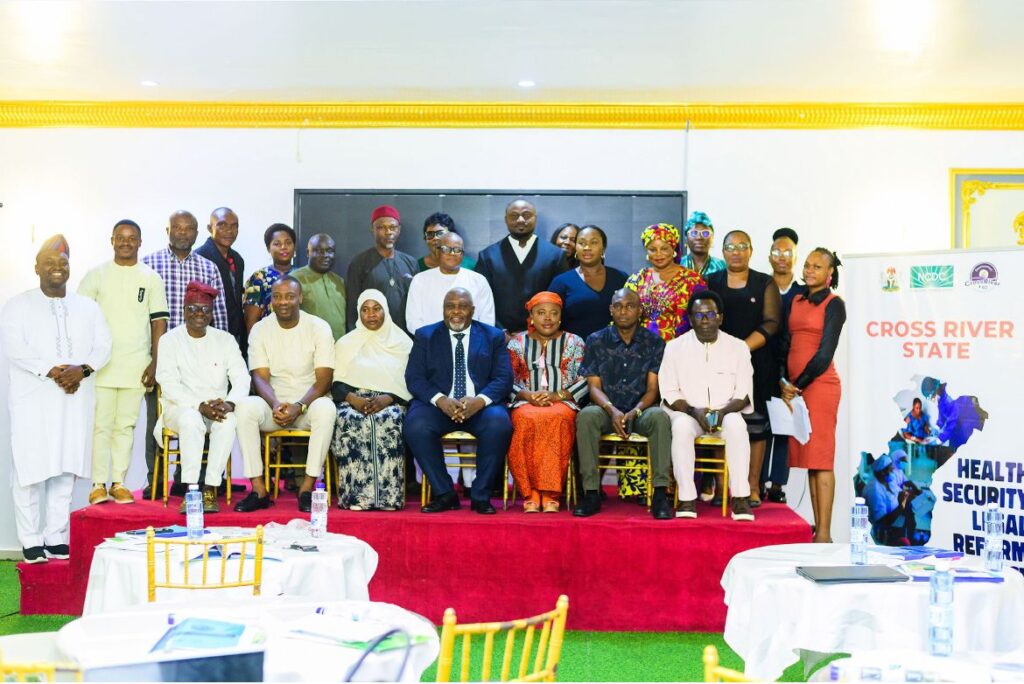
In a decisive step toward strengthening Nigeria’s subnational health security framework, the Cross River State Government—through the Ministry of Justice—hosted a high-level Stakeholder Validation Meeting in Calabar to review and endorse the Public Health Legal Assessment Report developed jointly by the Nigeria Centre for Disease Control (NCDC), Resolve to Save Lives (RTSL), and Orixine Consulting.
The event convened over 30 key stakeholders, including senior representatives from the State Ministries of Justice, Health, Environment, and the Primary Health Care Development Agency, alongside national partners from NCDC and RTSL, and members of civil society. Their collective engagement reinforced the critical importance of aligning state-level laws with both Nigeria’s national public health mandates and the International Health Regulations (IHR, 2005).
The validated report represents a landmark in Cross River’s journey toward resilient health governance. It presents a comprehensive legal mapping of the state’s public health legislation, highlighting significant gaps that currently hinder an effective and coordinated health emergency response. Among the critical issues identified are:
- The absence of IHR-compliant legal definitions for key terms such as quarantine, isolation, and public health emergency;
- Lack of a legal mandate for the implementation of the Integrated Disease Surveillance and Response (IDSR) framework;
- Inadequate biosafety standards and protocols across public health laboratories; and
- Weak legal provisions for addressing zoonotic diseases, food safety, and emergency health financing, amongst others.
Speaking at the event, the Honourable Commissioner for Justice, Hon. Ededem Charles Ani (represented by Barr. Anthony), underscored the state’s resolve to modernize its legal architecture to better respond to health threats.
“The validation of this report is a declaration of our commitment to building a resilient legal system that can protect our citizens during health emergencies,” he affirmed.
In the same vein, the Honourable Commissioner for Health, Dr. Henry Egbe Ayuk, reflected on the transformative potential of the assessment.
“This assessment shows where our laws fall short—and how to fix them. It is a guide for developing a robust Public Health Security Law,” he stated.
The successful validation of this report paves the way for the drafting of a comprehensive Public Health Security Bill for Cross River State—an essential legal instrument that will support improved inter-agency coordination, epidemic preparedness, and timely emergency response. Once enacted, the law is expected to become a model for subnational legal reform and a pillar of sustainable health security in Nigeria.
At Orixine, we are proud to support this reform initiative and to collaborate with state and national partners committed to embedding resilience and legal accountability at the heart of public health governance. The journey to safer, healthier communities begins with strong laws—and Cross River is leading the way.